

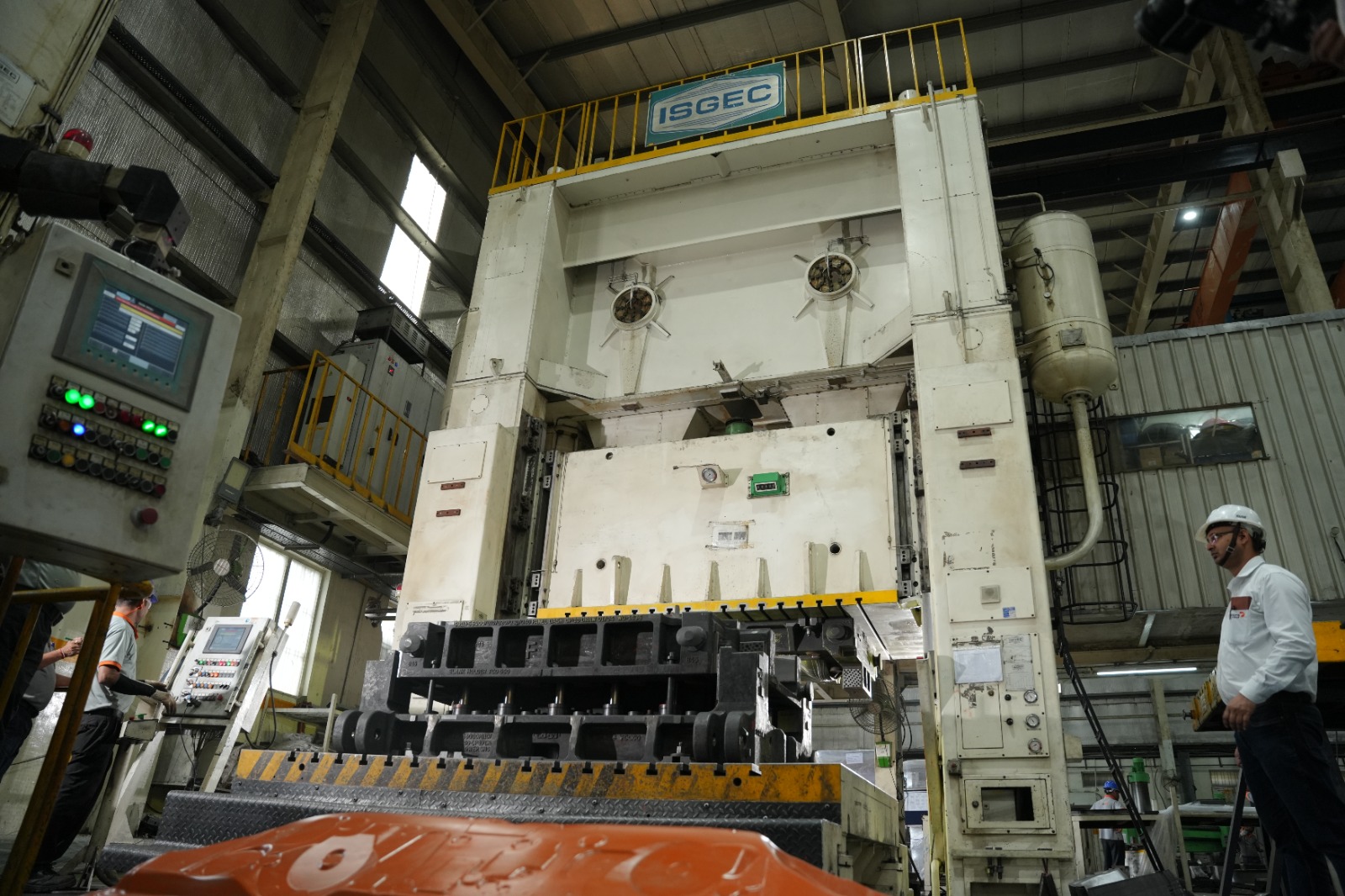
Choosing between a transfer die and a tandem die is one of the most consequential decisions in automotive metal stamping. Get it wrong and you face bottlenecks, scrap rates that kill margins, and retooling costs that derail project timelines. At Dai-Ichi Tools, we have engineered precision dies for automotive OEMs and Tier-1 suppliers since 2017 — and this guide distills what we know into a clear, actionable comparison.
What Is a Transfer Die?
A transfer die is a multi-station stamping tool where the metal blank is automatically transferred from one station to the next within a single press or a closely linked press system. Mechanical fingers or robotic arms move the part through progressive forming operations — piercing, drawing, flanging, trimming — all in a controlled sequence.
Because the blank is separated from the strip, transfer dies enable true 3D forming that progressive dies cannot achieve. This makes them ideal for parts with complex geometries, deep draws, or multi-flange requirements such as seat brackets, A-pillar reinforcements, and engine mounts.
What Is a Tandem Die Line?
A tandem die line uses a series of individual dies, each housed in a separate press, linked sequentially. Automation — typically a robotic arm or rail-mounted part transfer system — moves the stamping from press to press. Each press in the line performs a dedicated operation with its own tonnage, bed size, and tooling optimised independently.
Tandem lines dominate high-volume outer body panel production at OEM level, where sheer scale, massive part dimensions, and per-station quality control demands make multi-press configurations the preferred choice.
Transfer Die vs Tandem Die: Full Comparison
Tandem: Large to extra-large outer panels
Tandem: Medium-high — fewer free-form stations
Tandem: High to very high
Tandem: Very High
Tandem: Large — multi-press line footprint
Tandem: 4–10 spm (moderate)
Tandem: Shorter — individual die per press
Tandem: High — add/remove operations easily
When to Choose a Transfer Die
Transfer dies are the smarter choice when your requirements fall into these categories:
Production profile:
- Medium-to-high volume runs
- Parts under 800 mm in blanked size
- Complex 3D geometry with multiple flanges
- Tight dimensional tolerances required across all operations
- High strokes-per-minute output is a priority
Business conditions:
- Limited floor space in your facility
- Single press investment budget
- Tier-2 supplier targeting structural automotive parts
- New press line being set up from scratch
When to Choose a Tandem Die Line
Tandem die configurations become the preferred option under the following conditions:
Part characteristics:
- Extra-large outer body panels — bonnets, roofs, door outers
- Very high tonnage requirements per individual operation
- Parts requiring independent springback correction at each stage
- Sheet steel above 2.5 mm or aluminium outer panels
- OEM flagship model programmes with premium surface quality demands
Operational needs:
- Multi-model platforms sharing the same production line
- Frequent model-year design changes requiring station-level retooling
- Existing multi-press infrastructure already in place
- OEM-level annual volumes of 100,000+ parts per year
Cost Considerations
Tandem: Very High
Tandem: 3–5 presses
Tandem: Higher
Tandem: Lower at high scale
Tandem: 20–40 weeks
FAQs: Transfer Die vs Tandem Die
Can transfer dies and tandem dies produce the same parts?In many cases, yes — but the economics differ sharply. Transfer dies suit medium-volume, complex parts better. Tandem lines win on very large, high-volume outer panels. Your annual volume, part geometry, and floor space ultimately determine which is viable and cost-effective for your operation.
Which die type is better for aluminium automotive panels?Tandem die lines are widely preferred for aluminium outer panels in premium automotive because each press can be independently tuned for springback correction and draw bead geometry. Transfer dies handle aluminium structural parts effectively, but high-formability aluminium grades may challenge transfer finger clearance tolerances.
What is the typical tooling lead time for each type?Transfer die tooling typically runs 16–28 weeks depending on part complexity and simulation cycles. Tandem die tooling ranges from 20–40 weeks since each individual tool is designed, machined, and tried out independently before line integration, multiplying the coordination effort considerably.
Do transfer dies require a special press?Yes. Transfer dies require a press equipped with a dedicated transfer system — mechanical fingers, servo transfer bars, or 3-axis crossbar automation. Existing progressive or single-station presses cannot run transfer dies without significant retrofitting or full press replacement.
Which option suits a Tier-2 supplier with limited capital?Transfer die investment in a single transfer press is generally more capital-efficient for Tier-2 suppliers. A tandem line requires 3–5 presses plus automation infrastructure, demanding far higher capital expenditure and floor space. Transfer dies allow Tier-2 suppliers to win complex structural part programmes with one strategic press investment.
How does Dai-Ichi Tools support the die selection process?Dai-Ichi Tools provides upfront DFM (Design for Manufacturability) consultation, formability simulation using AutoForm R12, and die concept design review before committing to tooling build — helping customers make the right transfer vs tandem decision based on hard engineering data rather than assumptions.
Ready to Choose the Right Die for Your Press Line?
At Dai-Ichi Tools, we don't just manufacture dies — we engineer precision solutions tailored to your exact production requirements. Whether you're evaluating a transfer die setup or planning a full tandem line, our team of stamping specialists will help you make the right call before a single rupee of tooling budget is committed. Here's what you get when you work with us:
- Free DFM (Design for Manufacturability) consultation before project kick-off
- AutoForm R12 formability simulation to validate your part geometry
- Die concept review with clear transfer vs tandem recommendation
- 400+ dies manufactured annually across leading automotive OEMs and Tier-1 suppliers
- Tryout presses up to 1,600 tonnes on-site in Faridabad
Dai-Ichi Tools - Faridabad, India